The Royal Opera House was founded in 1946, located in Covent Garden. Alongside with the English National Opera. The Royal Opera House has associated with a dance company called 'Royal Ballet'.


Inside of The Royal Opera House Outside of The Royal Opera House
The Royal Opera House: What Do You See?
This video shows you what you really see; the hard working behind the scene, the ballet rehearsals and the orchestra band because they bring the performance back to live for the audience give them the ultimate experience.
History of The Royal Opera House:
The Royal Opera House, the original construction was in 1732. The first shown ballet within The Royal Ballet was presented in 1734. Then, 1735 the first season of opera's began by Handel's work. The Royal Opera House was burned down, lost all valuable items, the new building opened in 1858.In 1860's, until the Second World War the opera at the Royal Opera House sung in the original language, with star singers and conductors. The Royal Opera House was leased by it owners, Covent Garden properties Ltd to Mecca Ballrooms who used it profitably as a dance hall during the war. The owners approached the music publishers Boosey and Hawkes, towards the end of the war figured if they were interested taking possession of the building's lease, staging opera and ballet. However, Boosey and Hawkes took possession over the lease, and granted a sub-lease at liberal terms to a charitable trust established to run the operation. Lord Keynes, the chairman of trust. After the war, between 1910 and 1939 Sir Thomas Beecham presented many seasons opera.
Romeo and Juliet
Background:
The play was written by William Shakespeare in 1597. The genres contain tragedy, musical theatre and romance. Romeo and Juliet is a translated Italian tale version of The Tragical History of Romeus and Juliet by Arthur Brooke in 1562, and in 1567 William Painter retold in prose in Palace of Pleasure. Romeo and Juliet has been around for centuries and adapted for stage, film, musical and opera venues numerous times.


 This image shows the front of Juliet's outfit showing the top fabric going across each side as a scarf and the bottom half shows as fabric patterned skirt to show that Juliet's funeral outfit isn't just plain. Me and my partner wanted to portray Juliet as flowery girl.
 However our teacher gave us feedback, on how would the dancer "Juliet" move around with the skirt because the looks on the small mannequin is very tight if the dancer had to perform as she would be doing a lot of moving. So she told us to get a more suitable fabric for Juliet to move around. And the top half she said the fabric is fine but it shouldn't be a loose fabric or a tight fabric because once again the movement and it does make sense, as Juliet will be doing a lot of movements and she would be uncomfortable wearing loose or tight fabric. And my teacher explained to get fabric that's comfortable such as; silk, cotton, velvet and etc. And uncomfortable clothes are heavy layers, tight fabric, loose fabric and reasons why dancer can't wear because the difficulty the dancer would go through during the show and as a team of costume, we don't want any complications at all. Comfortable wear are light layers, silk, cotton and linen fabric and reasons why it's because the dancer would be able to move a lot around without any complications on stage.
 This week, we were assigned to design a costume for Romeo or Juliet but me and my partner Sephora decided to do Juliet as from a female interest it was easier to do. However this images shows the design on our model, this style represents as it's all black showing Juliet's funeral.
e.g,. wealth, costume, gender, age, uniform, status, religion
Romeo and Juliet
Background:
The play was written by William Shakespeare in 1597. The genres contain tragedy, musical theatre and romance. Romeo and Juliet is a translated Italian tale version of The Tragical History of Romeus and Juliet by Arthur Brooke in 1562, and in 1567 William Painter retold in prose in Palace of Pleasure. Romeo and Juliet has been around for centuries and adapted for stage, film, musical and opera venues numerous times.
Week 1:

These post-stick notes shown on the image are each information about Romeo and Juliet. As a group each one of us had to write about what we knew about Romeo and Juliet. In addition, being more creative we were told to write down emotions to describe the Romeo and Juliet also partially the family feud e.g. young lovers Romeo and Juliet, Capulet's and Montague's hatred towards each other. This post-stick was to brainstorm and have a more in depth ideas of Romeo and Juliet before setting our jobs into set stage, hair and makeup or costume for the competition.
This second image shows on the left side are my drawings that I drew. We were told to look through each magazines given to me and colleagues then draw what images mostly stood out and the reason we did this because this was another brainstorming ideas for The Royal Opera House as we are entered in the challenge for Romeo and Juliet facial expressions, paintings, and objects. My drawings show makeup essentials, a mountain with a curtain going across, an ancient clock from Liverpool Street, and a face statute. Each of my drawings have different meanings.
- Firstly, the makeup essentials show beauty as a female should always represent herself very neatly and this relates to Juliet because she's part of a upper class family, she should always present herself. The drawings shows perfume, lipstick, purse and etc.
- Secondly, I drew a mountain with a curtain going across and I chose this image from the magazine because it express forbidden love and hidden love for Romeo and Juliet as they are forbidden to see each other since their both families are apart of the family feud.
- Thirdly, the ancient clock from Liverpool street that I drew expresses that time precious and also useful for the set stage era for Romeo and Juliet. The reason the ancient clock expresses time is precious as the amount of times Romeo and Juliet sneak to see each other mischievously because of their family feuds they couldn't see each other as much and both couple die in the end which is devastating.
- Finally, the incomplete statue I drew was meant be a screaming statue and as statue's cannot say nothing. This expresses that the both young couple are apart of the family feud and they are meant be enemies but the young couple fell in love which meant that they had to secretly hid their relationship and cannot show any emotions or interest in the open public otherwise the feud will worsen.
In addition, the right side of the other page shows different types of fabrics that interests as individual
Also on the right side of the page shows different type of fabrics that I've been scanning through different magazines for which fabric meant to me and what related to Romeo and Juliet also what stood out to me mostly so I could work with costumes with Romeo and Juliet if that was my area of work. Some of my fabrics represent each meaning such as the blue silk presents Romeo as it's more of a rich male colour e.g. blazer or shirt. There's a rose gold sparkly fabric to present a royalty party themed ball, an African print to present more of an ancient pattern more unique and different, mostly silk on my research because royalties have more silky fabrics and this presents their riches as well. I chose some dull colours to present the lower class people or servants because during those era they couldn't afford to wear riches or silk fabrics unless they were told too by the higher class people. Some of these fabrics have given me ideas for Romeo and Juliet more in depth for props and costume if I decide to work with costume or prop.
 This image shows the front of Juliet's outfit showing the top fabric going across each side as a scarf and the bottom half shows as fabric patterned skirt to show that Juliet's funeral outfit isn't just plain. Me and my partner wanted to portray Juliet as flowery girl.
 However our teacher gave us feedback, on how would the dancer "Juliet" move around with the skirt because the looks on the small mannequin is very tight if the dancer had to perform as she would be doing a lot of moving. So she told us to get a more suitable fabric for Juliet to move around. And the top half she said the fabric is fine but it shouldn't be a loose fabric or a tight fabric because once again the movement and it does make sense, as Juliet will be doing a lot of movements and she would be uncomfortable wearing loose or tight fabric. And my teacher explained to get fabric that's comfortable such as; silk, cotton, velvet and etc. And uncomfortable clothes are heavy layers, tight fabric, loose fabric and reasons why dancer can't wear because the difficulty the dancer would go through during the show and as a team of costume, we don't want any complications at all. Comfortable wear are light layers, silk, cotton and linen fabric and reasons why it's because the dancer would be able to move a lot around without any complications on stage. This week, we were assigned to design a costume for Romeo or Juliet but me and my partner Sephora decided to do Juliet as from a female interest it was easier to do. However this images shows the design on our model, this style represents as it's all black showing Juliet's funeral.
Week 2
Hair And Makeup
Vision 2:
- Vibrant → Colourful
- Out of the box → Contrast → Engage with patterns → Bright colours in a dull environment
- Powerful
- Different
- Cultural
- Blossom
- I want to prove that ballet is not an outdated art form.
- The director is always interested why Juliet's family may have objected to her chosen Love in a way young audience would understand
- Where can the story be set? - Imagination, Anytime, century and era.
Research:
Theme:
Beauty of Love
Love/ Tragedy
Happy
Context:
Teenagers
Forbidden Love
Death/ Courage
Final visual for these keywords:
- To convey young audiences to understand
- Practicalities
- Ballet
- Dancing/Movement
- Who are the main characters (emotionally, theory and stories)
- Why we use makeup on the stage
- Difference between beauty makeup + stage
Makeup
- What can makeup, wig and hair tell about the story.
e.g,. wealth, costume, gender, age, uniform, status, religion
Informal - Dance Theme
Understanding the clients
- Personal Response
- Artistic Response
(Emotions) - Personal Response
Heartache - Dark Inside - Dull Colours
Materials
Textures
Colours - Artistic Response
Weight
4. Where do see this example today?
- Modern
- Young audience's relate
- Nowadays
5 designs for 5 characters:
- Juliet
- Romeo
- Mercutio
- Nurse
- Tybalt
Romeo and Juliet:
All these notes below are evidence of my vision 2. However, my planning shows hair and makeup ideas that I have written down. Therefore, I will be researching and experimenting makeup on models for practise to improve my skills or to change any ideas.
All these notes below are evidence of my vision 2. However, my planning shows hair and makeup ideas that I have written down. Therefore, I will be researching and experimenting makeup on models for practise to improve my skills or to change any ideas.
- Create
- Making
- Research
- Progress
- Evaluate
Romeo and Juliet Director's Vision:
Vision 2:
Romeo and Juliet is ultimately a story of young lovers. I want to create the production that is geared specifically focused on the audience of young teenagers of today. I want to prove that ballet is not an outdated art form, but one that is current and vibrant and a powerful medium for conveying twenty-first century dilemmas. Forbidden love is not common to young people today. I am interested in why Juliet's family may have objected to her chosen love in a way that young audiences today would understand. Where can this story be set? Why are these two families so determined to keep young lovers apart? Where do we see examples of this today and how can we depict that on stage so that young audiences will relate to it an immediate way?
Romeo and Juliet is ultimately a story of young lovers. I want to create the production that is geared specifically focused on the audience of young teenagers of today. I want to prove that ballet is not an outdated art form, but one that is current and vibrant and a powerful medium for conveying twenty-first century dilemmas. Forbidden love is not common to young people today. I am interested in why Juliet's family may have objected to her chosen love in a way that young audiences today would understand. Where can this story be set? Why are these two families so determined to keep young lovers apart? Where do we see examples of this today and how can we depict that on stage so that young audiences will relate to it an immediate way?


Juliet's Hair and Makeup (Mood Board):


Juliet's Hair and Makeup African Culture (Mood Board):


- Noted: All this images that I have captured are from Pinterest and I liked the contrast between light make up and then switched onto African theme and the reason why I did this because as my notes say I wanted to be creative and not simple so this will give me and idea what to recreate for Romeo and Juliet.
Change of Plans (Costume):
The image below shows my new planning for costume

- Briefly, I have changed from hair and makeup to costume instead. The reason I chose costume because I thought I could explore with different ideas and colours which interested me very much. However, I am still continuing with vision 2 but I preferred doing costume after and I understood more of vision 2 while doing costume instead as it was easier to could express more thoroughly through the costume that I will be creating.

This is my other planning. I want to express gender neutral through my costume and the character that I have chosen is Juliet. I haven't just chosen to express gender neutral but also alongside with African print costume and I want to show the director vision 2 as vibrant and powerful for conveying twenty-first century dilemmas. African print and gender neutral also shows forbidden love for young people today, as African Print expresses the beauty of love but gender expresses love and tragedy. I want the costume I am designing to denoting an expression that cannot be taken to refer to one gender only.
Gender Neutral Meaning:
- Suitable for applicable to, or common to both male and female genders.
My mood board presents African print dresses of different type of designs and pattern e.g. Fishtail African print, African print maxi dress and etc. These ideas I have chosen for my mood board and I explored on Pinterest.

 This imagine shows different type of African wax used on many dresses, such as; Dutch wax, Dashiki, Holland wax and much more. However I have explored the background of these type of African wax and there is meaning in every single African wax.
Types of African Prints:
Ankara
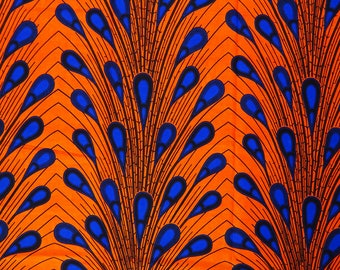
- Ankara isn't just the capital of Turkey. Ankara fabric is a popular fabric worn by many Africans
- Ankara is also known as a African print or African wax.
- 100% cotton fabric with vibrant patterns
- Ankara is a colourful cloth and is primarily associated with Africa because of it's tribal-like pattern and motifs.
Kanga
 This image shows a female wearing Kanga.
- Kangas have been a traditional type of dress amongst women in East Africa since the 19th century.
- The Kanga is a colourful fabric similar to Kitenge, but lighter and worn by women and occasionally by men throughout the African Great Lakes region.
- Kangas consist of three parts: The Pindo (Wide Border), The Mji (Central Motif), Ujumbe or Jina (The kiswahili) is featured on a strip which contains a message.
- The earliest pattern of the Kanga was patterned with small dots or speckles. These looked like plumage of the guinea hen, also called 'Kanga' in Swahili. - (This is where the name came from contrary to the belief that it comes from a Swahili verb for to close.
- Kanga is used a dress, skirt, head wrap, apron, pot holder, towels and baby carries etc.
Kitenge

- Kitenge is an East African, West African and Central African fabric
- Kitenge is often worn by women. This is used wrapped around the chest or waist, headscarf or etc
- Kitenges has become very popular as a fashion statement in urban pop culture in Africa. Such as; hoodies, trousers and accessories e.g. bags.
- Kitenge (Plural 'Vitenge in Swahili and 'Zitenge' in Tonga)
- Countries that Kitenge worn is at: Kenya, Nigeria, Ghana, Senegal, Liberia, Uganda, Tanzania, Rwanda and Democratic Republic of Congo
Dashiki

- The Dashiki is a colourful garment for women and men worn mostly in west Africa
- Dashiki has a formal and informal versions and varies from simple draped clothing to fully tailored suits
- It is frequently worn with a brimless kufi cap. Which is worn in Islamic communication in Africa
- The name 'Dashiki' is Yoruba adapted word from Hausa for 'Danshiki' or 'Dan ciki' means 'Inner Garment' in Hausa, as compared to 'Babban Rig' that is worn over 'Dan ciki' as the outer garment.
 This is my first sketch I drew of a dress that I found on pinterest and I am not much of artist. Therefore, the sketch shows a short tutu dress, in a kind of a young princess dress and added flowers patterns as shown on the sketch. The dress embraces young love as Juliet is a young woman.
 This is my second drawing that I drew from an idea that I also found on Pinterest but I will be recreating my own version. However as the dress shows the final sketch that I will be creating for the challenge. The sketch shows two pockets on the left and right but they are not pockets to be used but I have seen dresses that are similar to having pockets but not used pockets but for fashion. However, the flowing shows a fairly flow at the bottom to embrace beauty of love as it's flowing and spread everywhere. And there are designed petals on the dress which will be patterned on the dress, also the shaded part on the dress will be a different colour.
Final Design:
 This is my final piece for the Royal Opera House Challenge that I have designed. I created an African print dress but I didn't go with the gender but I still created a vibrant and powerful medium for conveying the twenty-first century. And this dress embraces and expresses young love relating to forbidden love from the director's vison and I believe many young audience would grab their tension towards the dress. This is a powerful dress for a young women especially Juliet as she is an upper class young lady expressing her love as a young love also showing that Juliet's family is objected by her love. However, I didn't go for my original plan; as I wanted to do makeup but I changed my mind towards creating a costume but it came with good results and I did not want to be different or cultured but embracing the power of love and beauty of love through the dress itself and I also didn't go with the gender neutral plan but I stuck with African print as I couldn't get attention off the colours and how vibrant it is. Throughout the Royal Opera House challenge, I learnt time management ad most importantly the expectation for the director's vision and the ballet casts. But I believe it was a great experience and opportunity to work but there was stressful moments and being under pressure but this helps for the future into the career world and it is very beneficial. And I hope in the future, there are challenge similar to the Royal Opera House. I believe with the next challenge or in the career world this experience will be useful and I will be skilled for it.
Unit 6 - Shakespear's Play
Firstly, me and my production team were working with the Level 3 Year 1 with their Macbeth show; we recreated their show with lighting, costume and soundtrack they wanted and we produced it for them. As I wasn't in to participate during the rehearsals because I was ill but I was still informed on what I had to do with my part of job which was lighting. And I also participated last minute of the rehearsals on the day alongside with Madelon, Adam and Diogo in the gallery but as the show came in the evening, I didn't get to do the job because Adam took over as he created the lighting cues and knew what he was doing.
Onwards, came towards the last show and I also participated on the last and ran through rehearsals and alongside with great team work with Sephora on the sound desk and Diogo being stage management. I managed to redeem on the last show by taking over the lighting desk. There were a few mistakes that I have done twice but confidentially I still carried on.

At the end of day, I enjoyed participating with the Level 3 Macbeth's show and the thrill I had was exciting but also nervous racking because it was my first using the lighting desk for a show. In my opinion, I believed in myself that I done great because even though there was mistakes I still pulled through and continued without stopping myself. I believe I feel very comfortable in this position of using the lighting desk because I like to use the thrill of lighting and I want to learn also explore. However, next time I should step up more and put myself out there and while I experienced being on the lighting desk for the first time I felt very good about using it but I did feel scared as I thought I will fail and create errors but most people make errors during shows but I will learn to improve when I have access to the theatre.


No comments:
Post a Comment